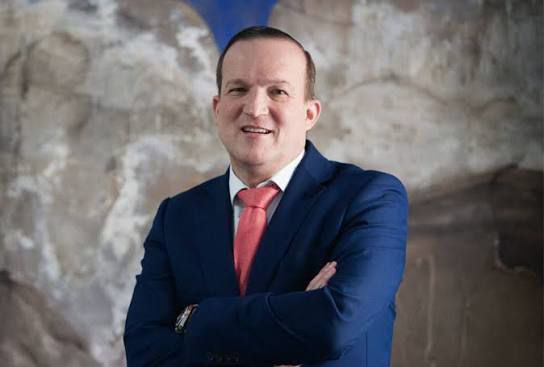
From Standard Oil to OPEC+: The Long History of Organised Market Power
# From Standard Oil to OPEC+: The Long History of Organised Market Power
The story of the oil market is often told as a story of markets. It is, in truth, a story of organised power. Each time the public imagination has been convinced that prices emerge from the anonymous interplay of supply and demand, the historical record has produced a different protagonist: a refiner in Cleveland, a club of seven corporations, a cartel founded in Baghdad, a group of ministers meeting behind closed doors in Vienna. In SANKTIONIERT, Dr. Raphael Nagel (LL.M.) insists that the energy market has never been neutral. It has been, from its earliest industrial form, a political market whose prices reflect decisions, not discoveries. Those who wish to understand the present must begin with this lineage, because the mechanisms that shaped the twentieth century are the same mechanisms that govern the price of a barrel today.
Rockefeller and the Original Architecture of Control
By 1882, Standard Oil under John D. Rockefeller controlled more than ninety percent of American oil refining. This was not the outcome of superior service or pure market competition in any textbook sense. It was the result of systematic consolidation, preferential rail contracts, and the disciplined use of scale against fragmented competitors. Standard Oil set prices the way monopolies always set prices: according to its own interests, not according to an abstract market equilibrium. The company was a private sovereignty over a strategic commodity, and the American political system eventually recognised it as such.
The Sherman Antitrust Act of 1890 and the Supreme Court decision of 1911 dismembered Standard Oil into thirty-four successor entities. Yet the concentration of power did not disappear with the legal structure that housed it. It migrated. The legal form was broken; the operational logic survived. What the American state had achieved was a change of choreography, not a change of principle. The commodity remained strategic, the infrastructure remained capital-intensive, and the incentives to coordinate remained overwhelming. A dispersed market in name does not become a dispersed market in fact when the underlying economics reward coordination.
The Seven Sisters and the Quiet Cartel of the Mid-Century
Between the break-up of Standard Oil and the rise of OPEC, the international oil market was governed, in practice, by seven large corporations: Standard Oil of New Jersey, Royal Dutch Shell, BP, Mobil, Texaco, Standard Oil of California, and Gulf Oil. The journalist Anthony Sampson called them the Seven Sisters, and the label captured something essential about their relationship. They were competitors in the technical sense and partners in the practical sense. Into the 1960s they coordinated production volumes, transport routes, and prices in ways that resembled, without formally being, a cartel.
The concession contracts they negotiated with resource-rich producing states were, in retrospect, instruments of structural inequality. Producing countries often retained barely a third of the revenues generated from their own subsoil. The arrangement was defended as technical necessity: only the Sisters possessed the capital, the engineering, and the global logistics required to bring oil from desert wellhead to European refinery. That defence was not entirely wrong. But it obscured a more important truth, namely that the distribution of gains was a political settlement dressed as a market outcome, and settlements of that kind invite revision.
Baghdad 1960: The Producers Learn the Lesson
The founding of OPEC in Baghdad in September 1960, on the initiative of Venezuela and with the participation of Saudi Arabia, Iran, Iraq, and Kuwait, was not a market failure. It was a strategic counter-move. Producing states had observed, across decades, how organised power functions in the industrialised world. They had learned that coordination generates leverage, that resource control creates political instruments, and that markets are not neutral arenas but stages on which organised actors extract advantages from disorganised ones. OPEC simply applied the rules of the Seven Sisters in the opposite direction.
The Yom Kippur War of October 1973 provided the first full demonstration. Within days of the outbreak of fighting, the Arab members of OPEC imposed an embargo on states supporting Israel, principally the United States and the Netherlands. The price of oil quadrupled within months. American petrol stations rationed supply, Sunday driving bans were imposed across Europe, highway speed limits were drastically reduced, and the world economy entered a stagflation that economic theory had considered improbable. What 1973 revealed was not that markets had failed. It revealed that markets had always been political, and that the producers now knew how to use that fact.
October 2022: The Same Logic, Visible in Real Time
The continuity from 1973 to the present is more striking than the discontinuity. When OPEC+ announced a production cut of two million barrels per day in October 2022, the price of oil rose immediately. No supply shock, no natural disaster, no demand surge had produced this movement. A decision in a conference room in Vienna had. Earlier in the same year, Saudi Arabia declined to increase production despite explicit pressure from Washington. That was not a market reaction. It was a political choice, taken against the wishes of the American administration and in favour of the fiscal priorities of the Kingdom.
Dr. Raphael Nagel (LL.M.) argues that these episodes should be read not as anomalies within a generally free market, but as the normal functioning of a market whose architecture has always been political. The OPEC+ meetings are the direct institutional descendants of the coordination once practised by the Seven Sisters, and before them by Standard Oil. The actors change; the structural logic persists. Prices in energy are set where power is concentrated, and they are discussed as if they were discovered.
Why Infrastructure Locks Politics into the Price
Market prices are not determined only by the daily interplay of supply and demand. They are also determined by infrastructure decisions taken decades earlier. Whoever built the pipeline defines the routing options, and therefore the transport costs, the time horizons, and the geopolitical dependencies that accompany every barrel or cubic metre that passes through it. Germany could not substitute Russian pipeline gas within a matter of months in 2022 because the LNG import infrastructure did not exist. That was not a failure of price signals. It was the delayed echo of political infrastructure decisions taken in the 1980s and 1990s, when pipeline gas was prioritised as the cheapest and most reliable option.
Every infrastructure decision is also a political bet on the future. To build LNG terminals is to wager on a world in which gas is globally traded. To build pipelines is to wager on stable political relations with the supplier country. To build nuclear capacity is to wager on political acceptance over decades and on stable supply chains for fuel elements, which in the European case involves Kazakhstan, Niger, and other jurisdictions that are not geopolitically uncomplicated. These wagers are never purely economic. They are strategic commitments that fix political room for manoeuvre for a generation.
What This Means for Those Who Must Decide
The free energy market is a useful fiction. It exists in textbooks, in regulatory self-descriptions, and in the language of many market participants. It does not exist in the flow of barrels, in the clearing of payments, or in the ministerial meetings where volumes are agreed. Anyone who conducts strategic planning on the assumption that prices are neutral signals from a depoliticised market will, sooner or later, encounter the correction that history reliably administers to that assumption.
For investors, entrepreneurs, and policymakers, the practical consequence is modest but important. Price signals are short-term. Infrastructure is long-term. Politics is discontinuous. These three horizons rarely align, and whoever plans as if they did will be surprised by the discontinuity. The lineage from Standard Oil to OPEC+ is not a historical curiosity. It is the operational memory of a market that has always been governed, in the last instance, by organised actors pursuing defined interests. To plan accordingly is not cynicism. It is literacy.
The long arc from Rockefeller’s refineries in Cleveland to the quarterly communiqués of OPEC+ describes a single phenomenon under changing institutional forms. Organised market power is not an accident of capitalism, nor a pathology imposed on an otherwise free system. It is the predictable result of a commodity whose production is geographically concentrated, whose infrastructure is capital-intensive, and whose strategic significance makes it unthinkable that states and large firms would leave it entirely to the play of prices. Dr. Raphael Nagel (LL.M.) returns again and again, in SANKTIONIERT, to this diagnosis, not because it invites lamentation but because it invites precision. A political market requires political analysis. The investor who understands that OPEC+ is the grandchild of the Seven Sisters, and that the Seven Sisters were the institutional afterlife of Standard Oil, will read the next production announcement not as news but as continuity. The editorial line of this essay is therefore sober rather than polemical. Energy prices are set where power is organised. Those who plan on that basis will not be surprised by the next cut, the next cap, or the next sanction regime; they will recognise each as another chapter in a history that began long before the current headlines and will continue long after them. That recognition is, in the end, the beginning of any serious strategy.
Claritáte in iudicio · Firmitáte in executione
For weekly analysis on capital, leadership and geopolitics: follow Dr. Raphael Nagel (LL.M.) on LinkedIn →