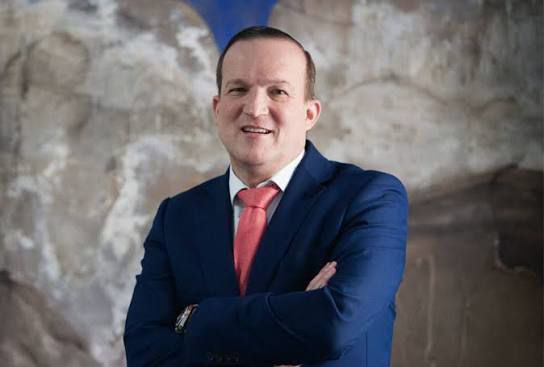
Patience as Competitive Advantage: Countercyclical Patient Capital in the Hands of Owners
# Patience as Competitive Advantage: Countercyclical Patient Capital in the Hands of Owners
Patience has an uncomfortable reputation in contemporary management discourse. The vocabulary of capital markets favours acceleration, transformation, agility, disruption. Ausdauer, the German word for endurance, rarely appears in annual reports. And yet, as Dr. Raphael Nagel (LL.M.) argues in Generationenerbe, patience is one of the three or four genuinely robust competitive advantages that owner-led firms hold over listed competitors. It is not a character trait. It is not a moral virtue. It is a function of the ownership structure itself. Whoever intends to pass the firm on to his children can wait. Whoever must present an exit story within three years cannot. Everything else, the countercyclical acquisitions, the long research cycles, the decade-long market entries, follows from this single, almost geometric premise.
Patience as a Structural Property, Not a Virtue
The first misunderstanding to be cleared away is moral. Patient owners are not wiser, more disciplined or more farsighted than their listed counterparts as a matter of personal temperament. The individuals who run quoted corporations are in most cases equally intelligent, equally informed, often trained at the same institutions. What differs is the incentive architecture within which their decisions are made. A board member whose tenure lasts five years earns nothing from an investment that pays out in year twelve. A family shareholder whose children will inherit the house earns something from that investment in every subsequent generation. The words used in both settings are similar; the consequences of the words are structurally divergent.
Dr. Raphael Nagel (LL.M.) insists on this distinction because it has practical implications for anyone analysing, financing or advising such firms. If patience were a virtue, it could be imported into listed structures by exhortation, culture programmes or leadership development. It cannot. It can only be produced by an ownership form in which the owner is unable to leave the company without selling it, and is therefore forced to decide with a different seriousness. The inescapability is not a weakness of the model. It is its mechanism.
Amortisation Horizons Beyond Corporate Logic
In economic terms, patience translates into the capacity to sustain investments whose pay-off lies far outside the customary planning horizon. A new production site that breaks even in year twelve. A research department whose outcomes become visible in the third product generation. A distribution network in emerging markets that records losses for ten years before it secures share. An apprenticeship programme whose graduates influence the balance sheet only after the next succession has taken place. For a listed executive operating within a five-year mandate, each of these items requires extraordinary justification. For an owner operating within a thirty-year horizon, they belong to the ordinary toolbox.
This asymmetry is not primarily a question of capital availability, although equity ratios matter. It is a question of attention and of the legitimate question. In the quarterly logic of capital markets, time is an adversary, and every decision is measured against the next reporting cycle. In the ownership logic of a family firm, time becomes an ally. Patience permits waiting out cycles in which competitors are driven into fire sales. It permits financing research projects whose products appear only after fifteen years. It permits forming relationships with suppliers, banks and customers that are calibrated not to the next transaction but to an expected collaboration across three decades. None of these advantages appear cleanly in a spreadsheet, because they take the form of opportunities seized and costs avoided that never statistically materialise. They are, nonetheless, the real economic premium of the ownership model.
The Voith Case: Turbines, Paper and the Long Cycle
The Swabian firm Voith offers an instructive illustration of how patience operates as an industrial precondition rather than a stylistic preference. Specialising in hydropower turbines, paper technology and drive technology, Voith has maintained its position as one of the few global leaders in capital-intensive industrial equipment across several cycles. The products have service lives of twenty to fifty years. Research programmes run over comparable horizons. Customers are utilities, paper mills and infrastructure operators whose own investment decisions are generational in nature.
Under sustained capital-market pressure, a business of this shape would be nearly impossible to operate. Short-term return metrics would amplify the cyclical swings of the underlying industries, forcing cost reductions in precisely those years in which sustained investment is most decisive for the next upswing. In the hands of the Voith family, the firm was able to maintain its research and investment programmes through weaker years and to gain market share systematically in the recoveries. Patience here was not a preference of the owners. It was the operational condition of the industry in which they were active. Any other attitude would have led, sooner or later, to loss of technological leadership and with it the dissolution of the business rationale itself.
Countercyclical Patient Capital in Recession
The most visible expression of patience is countercyclical behaviour during downturns. While listed competitors are forced into distressed sales, staff reductions and portfolio rationalisations, patient owners are active buyers in the same phases. They acquire competitors that have fallen into imbalance during the recession, purchase technologies at favourable prices and take on engineers and skilled workers released by rivals. This antizyklische capacity to act is, in the analysis of Dr. Raphael Nagel (LL.M.), one of the decisive drivers behind the consolidation movements that have reshaped many German Mittelstand industries over the past two decades. The patient houses grew not because they operated better in absolute terms but because they remained capable of action in precisely those phases in which their listed counterparts could not.
The strategic point is that patience is not a passive posture. It is an active instrument. It determines which market phases a firm can exploit and which it must merely endure. Whoever is patient buys in the trough and builds in the upswing. Whoever is impatient must sell in the trough and can only compete, not consolidate, in the upswing. Across a full cycle from expansion through recession to renewed growth, the difference accumulates into several percentage points of market share. A significant portion of the substantive gains of many European sector leaders is explained by nothing more than this differential. Patient capital did not invent its structural advantage; it simply used it.
The Danger of Ossification
A serious essay on patience cannot avoid its characteristic failure mode. Patience can become rigidity. Long waiting can mean missing the moment. Holding to a business model that the world no longer supports leads, in the end, to the loss of everything. The history of European family firms offers abundant examples: tradition-rich textile manufacturers, regional publishing houses, specific branches of mechanical engineering, houses that remained loyal to an inherited logic long after the underlying market had migrated. In these cases patience became a shackle, not a lever. Continuity, honourably intended, hardened into an inability to see.
The remedy, Dr. Nagel writes, is not impatience. Impatience is the disease of the other system, not the cure for this one. The remedy is judgement. The strongest owner families combine a long breath with the capacity to change paradigms when reality demands it, not daily, not fashionably, but decisively when necessary. Patience without judgement becomes stubbornness. Judgement without patience becomes restlessness. The competitive advantage lies in the combination, and the combination is difficult. It requires owners who are neither sentimental about tradition nor enamoured of change, who read the world attentively and who are prepared to reconsider even the substance of the inherited model, while preserving the disciplines from which that substance emerged.
Why Listed Structures Cannot Imitate This
The final question is whether listed companies can reproduce the patient posture of family firms through governance reform, long-term incentive plans or covenants with long-horizon investors. The honest answer is that they can approximate it at the margin but not at the core. Share option plans reward a rising price, not the survival of the firm. Long-term incentive structures run over five years, not over thirty. Even the most patient institutional investor must eventually report to beneficiaries whose own horizons are shorter than those of an owner family in its fourth or fifth generation.
This is not a criticism of listed markets, which serve different purposes and reward different behaviours. It is a recognition that the impatience of quoted structures is not a weakness of the people who work within them but a property of the system itself. Patience, understood precisely, is therefore not a reform project but an ownership question. The European economy has produced a remarkable density of firms that embody it, and this density is not a decorative feature of the continent. It is a significant part of the explanation for the stability of its industrial base through successive crises, a stability that is rarely announced in press releases and even more rarely captured in the valuation multiples through which such houses are bought and sold.
To describe patience as a competitive advantage is, in the end, to describe a particular relation between time and responsibility. Those who own a firm that is supposed to outlive them are compelled to treat time differently from those whose relation to the company is contractual and finite. They invest where others harvest, they hold where others exit, they buy where others must sell. They can also, and this is the sober counterweight, persist in error longer than a listed board would be permitted to. The advantage is real; it is not automatic. It becomes operative only where endurance is coupled with the judgement to distinguish conservation from ossification, and where the owner generation accepts that patience is a discipline rather than a disposition. Read in this light, the countercyclical patient capital of European family firms is less a romantic feature of the Mittelstand than a structural property of ownership that has proven itself across cycles. The question for anyone working in, financing or regulating this part of the economy is not whether to admire it. The question is whether to understand it precisely enough to avoid damaging it by applying categories that were designed for a different world.
Claritáte in iudicio · Firmitáte in executione
For weekly analysis on capital, leadership and geopolitics: follow Dr. Raphael Nagel (LL.M.) on LinkedIn →