Generational Legacy in the Digital Age: Rethinking Technology, Capital Discipline and Values
# Generational Legacy in the Digital Age: Rethinking Technology, Capital Discipline and Values
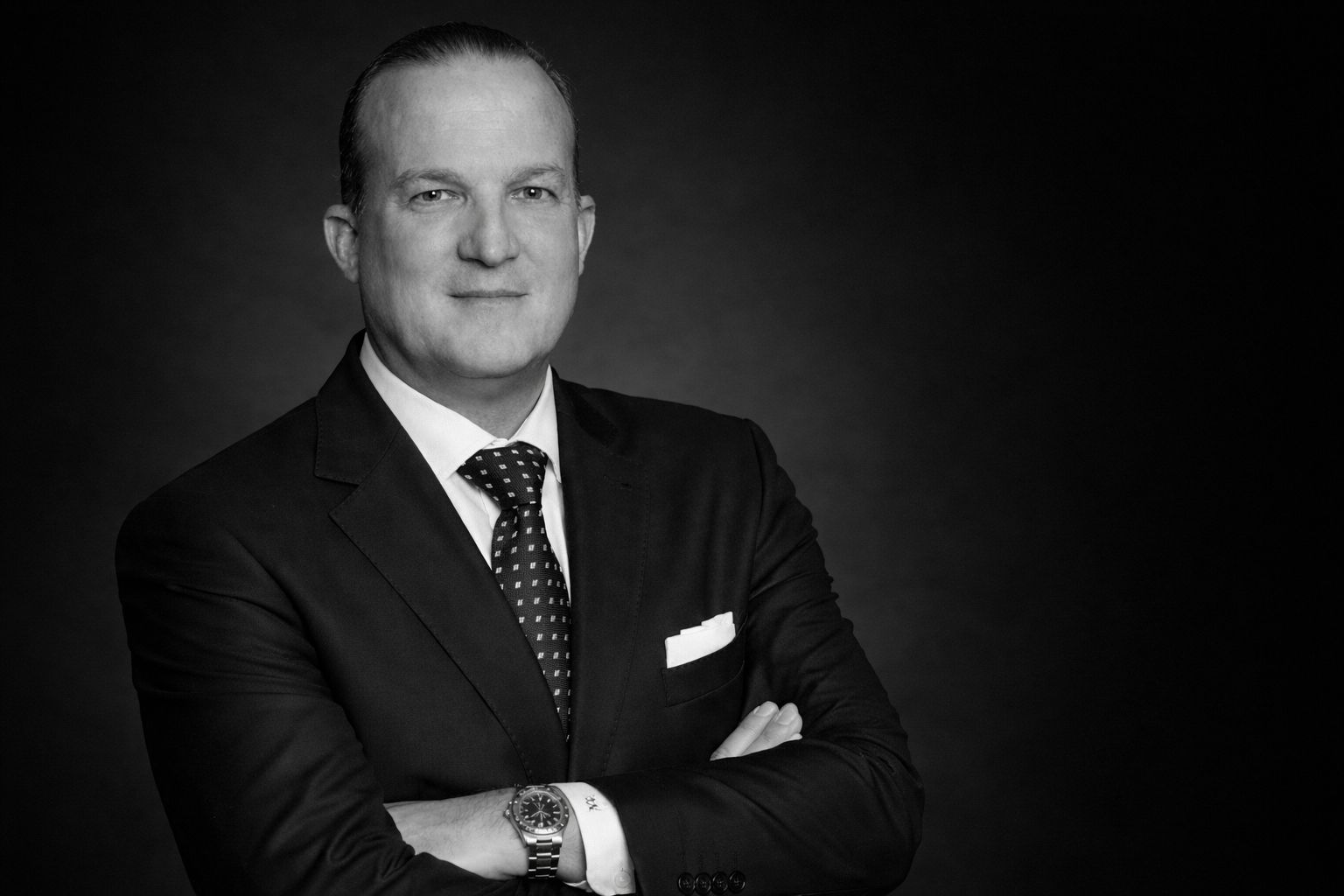
Every generation of an owner family inherits two things at once: a balance sheet and a worldview. In the present decade, both are under pressure. Digital transformation compresses the product cycles on which European industrial families built their reputations. Capital markets, having rediscovered volatility, reward speed over continuity. And a cohort of heirs, educated in other disciplines and other countries, is asked to decide whether the house they received is still the house they want to hand over. In his book Generationenerbe, Dr. Raphael Nagel (LL.M.) describes this constellation not as a crisis of the Mittelstand but as a test of its governing idea. The question is not whether family firms can survive digitalisation, but whether the logic that made them durable, the long time horizon, the personal liability, the slow accumulation of trust, can be translated into structures that work under conditions the founders never encountered. This essay follows that translation. It asks how the classical virtues of owner capitalism, patience, discipline and reputation, can be rewritten for a world in which technology, capital and values no longer move on separate tracks.
The Digital Imposition on Patient Capital
Digitalisation enters the family firm as both burden and opportunity, and Generationenerbe is deliberate in refusing to resolve that tension prematurely. For an owner whose investment horizon spans decades, the attraction of digital technology is obvious: better data on processes that have been run on instinct for two generations, new forms of customer proximity, machinery that communicates with itself. The burden is equally clear. Digitalisation demands capital expenditure whose payback falls into the same temporal category as classical research investment, only with a shorter half-life. A control system installed today may be obsolete in a decade, while the lathe it supervises will still be cutting steel in forty years.
The mismatch is not accidental. It reflects a deeper problem. Family firms have historically amortised their capital over the life cycle of physical assets. Software has no such life cycle. It decays in use and demands perpetual reinvestment. An owner family that treats its ERP system like a stamping press will find itself, after ten years, running an infrastructure its own engineers no longer understand. The discipline that served the industrial generation, buy well, maintain indefinitely, does not translate without modification into the logic of digital assets.
What translates, and this is the argument of Dr. Raphael Nagel (LL.M.), is the underlying principle: invest from retained earnings, avoid leverage that forces decisions in the wrong quarters, and refuse the fashion cycle of the consulting industry. Digital transformation that is paid for out of the firm’s own cash flow, implemented on a timeline set by the family rather than by vendors, and measured against the productive life of the business remains compatible with the patient capital tradition. What is incompatible is the imported assumption that every firm must transform at the pace of venture-backed competitors whose very existence depends on not surviving the next funding round.
Capital Discipline in Volatile Markets
The second pressure on the inherited model comes from the capital markets themselves. The volatility that entered European balance sheets with the energy crisis of 2022 and the interest rate normalisation that followed has reset the cost of laziness. A family firm that carried too much working capital through the decade of zero interest rates paid a small price. The same posture in a world of four percent refinancing is materially more expensive. Capital discipline, which the Mittelstand has practiced instinctively for generations, now has to be practiced explicitly and measured quantitatively.
This is less a departure from tradition than a return to it. The high equity ratios that Generationenerbe identifies as the statistical signature of owner firms were originally a response to exactly this kind of environment, banks that could withdraw lines, markets that could close, suppliers that could demand cash. The interim decades of cheap money made such precautions look quaint. They are not quaint any longer. An owner family entering the next cycle with forty or fifty percent equity, long supplier relationships and conservative working capital policies has reclaimed a position that was briefly unfashionable and is now structural advantage.
The discipline extends beyond the balance sheet. In volatile markets, the temptation to hedge financially, to diversify acquisitively, to chase yield through adjacent businesses, grows precisely at the moments when it is most dangerous. The families that will emerge stronger from the coming decade are those that understand capital discipline as a refusal, not an optimisation. A refusal to lever into cycles one does not control. A refusal to buy growth that requires integration skills the house does not possess. A refusal to convert the firm into a portfolio in the belief that portfolios are safer than focus. They are not. They are only more distributed.
New Succession Architectures: Foundation, Holding, External Management
The succession question, already the most fragile hinge of the family firm, acquires new complexity in a digital and volatile environment. The classical model of intra-family succession, father to son, uncle to niece, presumes a pool of family candidates willing and competent to run an operating business whose technical demands grow every year. That pool has narrowed. Heirs are educated internationally, often in fields remote from the family industry, and the industries themselves have become less legible to outsiders than they were three generations ago. To insist that the next chief executive must carry the family name is, in many houses, to choose between a weak leader and an empty chair.
Generationenerbe does not treat this as failure. It treats it as an invitation to rethink what family succession actually means. The foundation model, exemplified in houses such as Bosch, separates operational leadership from ownership without dissolving the long-term values orientation. The holding model, as practiced by the Haniel family across ten generations, organises hundreds of shareholders around an institutional family council and a professional management layer. The external management model, increasingly common in mid-sized firms, preserves family ownership and family governance while delegating operational execution to managers whose competence outweighs their pedigree. Each model translates the original logic of owner responsibility into a structure that no longer requires every generation to produce a chief executive.
The common thread is governance. None of these architectures works without explicit rules, family constitutions, shareholder agreements, clear protocols for conflict. The informality that carried the first and second generation becomes a liability in the third and fourth, when the shareholder circle multiplies and cultural drift accelerates. The houses that will last another fifty years are those that invest in governance with the same seriousness with which their grandparents invested in machinery. It is, in the language of Generationenerbe, the institutionalisation of what was once carried by a single person.
Values as Operating System
Technology and capital structures, however thoughtfully chosen, do not hold a house together. Values do. The chapters of Generationenerbe on education rather than inheritance, on the name at the door, on trust as invisible capital, converge on a single proposition: the generational firm is finally held by the disposition of the people who own it. That disposition is transmitted at the breakfast table, not in the supervisory board, and it decays quickly when it is not actively cultivated.
The digital age complicates this transmission in specific ways. Children of owner families grow up with the same devices, the same social networks and the same attention economy as everyone else. The particular seriousness that marked the industrial generation, the understanding that a euro is earned before it is spent, that a supplier relationship is a thirty-year commitment, that a name on the door is a personal liability, is not reinforced by the surrounding culture. It has to be taught against the current, deliberately and repeatedly, by parents who often no longer experienced the formative hardships themselves.
What Dr. Raphael Nagel (LL.M.) calls the translation of values into a working operating system is therefore less a matter of corporate culture seminars than of family practice. Early exposure to the business without titles. External work experience before internal positions. Explicit conversations about the history of the house, including its failures. Restraint in consumption that is lived, not merely preached. None of this scales, none of it is visible in quarterly reports, and all of it is the precondition for the economic structures described in the preceding sections. Governance without values is a shell. Values without governance are a sentiment. The generational firm requires both, and the digital age has made the second harder, not easier, to sustain.
The Legacy as Forward Contract
Read in this light, Generationenerbe is less a backward-looking tribute to the Mittelstand than a forward-looking governance proposal. Its central insight is that the elements which made family firms durable, long horizons, personal liability, accumulated trust, reputation bound to a name, are not nostalgic features of an industrial past. They are structural advantages in a world that has rediscovered volatility and is about to rediscover the cost of short-termism. The task of the current generation is not to preserve these advantages as museum pieces, but to embed them in architectures, foundations, holdings, family constitutions, governance protocols, that can carry them through the shareholder multiplication, the technological acceleration and the capital market pressure of the coming decades.
A digital family business legacy, understood in these terms, is not a contradiction. It is a forward contract between generations: the current owners agree to carry the costs of transformation, the disciplines of governance and the burdens of education, in exchange for handing over a house that is still recognisable as theirs. The contract is unusual in that one party, the next generation, has not yet signed. It can only be honoured by behaviour, and the behaviour is measured not quarterly but in decades.
What Generationenerbe finally proposes, under the surface of its case studies and its empirical arguments, is a way of thinking about economic activity that refuses the false choice between tradition and transformation. The families that have carried European industry through a century of upheaval did not do so by clinging to the past. They did so by maintaining a specific relationship to time, one in which decisions were made for people not yet born and accountable to people already gone. Digitalisation, volatile capital markets and new succession forms do not abolish this relationship. They test it. The test is whether an owner family can still think in generations while acting in weeks, still accept personal liability while delegating operational execution, still educate its children in seriousness while surrounded by a culture that treats wealth as entertainment. The answer will differ from house to house. What Dr. Raphael Nagel (LL.M.) insists on is that the question itself has not changed. The silent owners of Europe, those who build machines that run in Mexican breweries and Korean semiconductor plants, remain the substance behind the surface of the continent’s economy. Whether they remain so in fifty years depends on whether the current generation treats its inheritance as an asset to manage or as a trust to honour. Everything in Generationenerbe points toward the second reading, and the work of the coming decade will be to translate that reading into structures that hold.
Claritáte in iudicio · Firmitáte in executione
For weekly analysis on capital, leadership and geopolitics: follow Dr. Raphael Nagel (LL.M.) on LinkedIn →