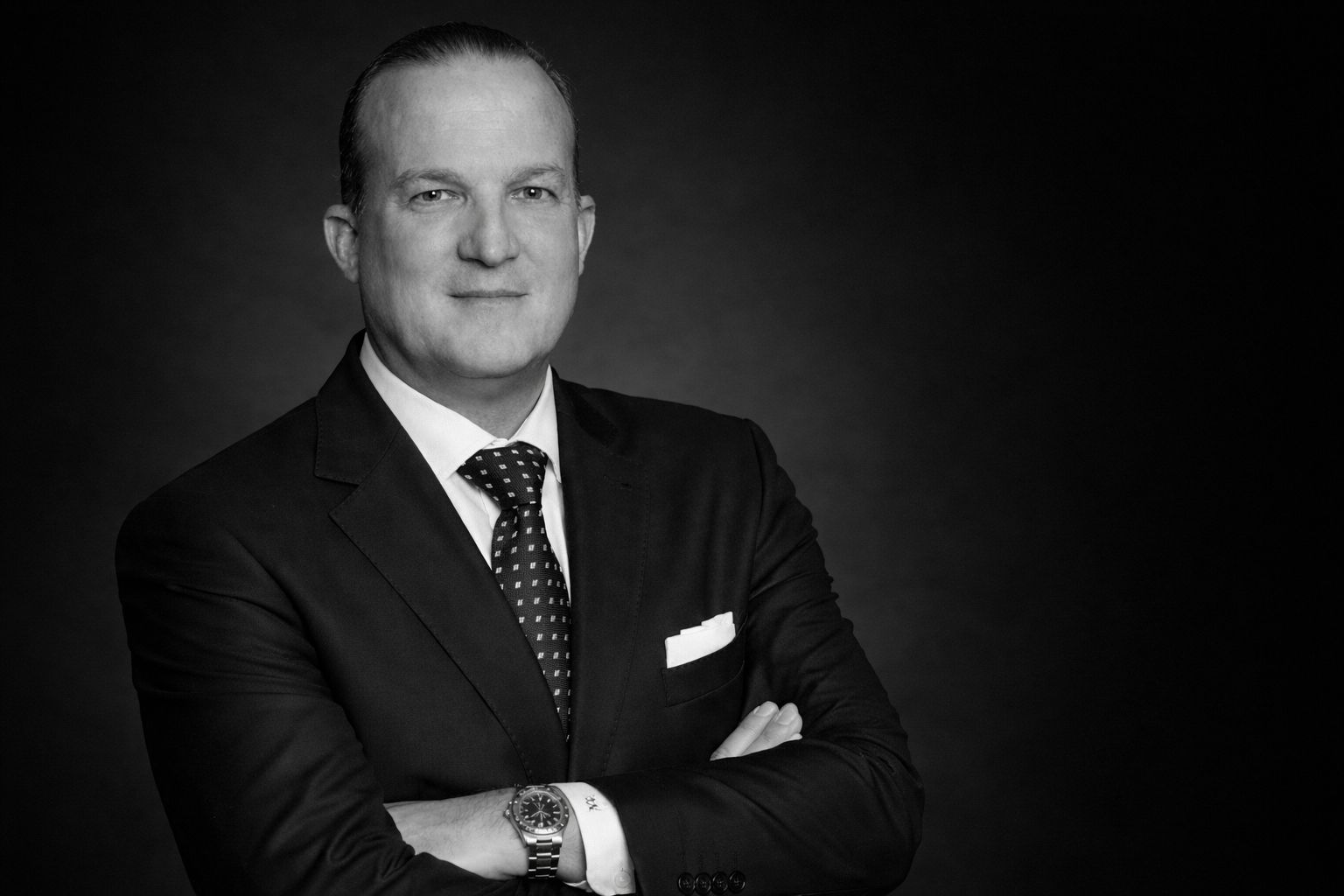
Family Office Infrastructure Investments: Why Generational Capital Is the Ideal LP for Systemically Critical Assets
Family Office Infrastructure Investments match generational wealth with systemically critical assets such as regulated energy grids, water networks, data centers and defense technology. Dr. Raphael Nagel (LL.M.) argues in KAPITAL that family offices are the ideal LP for this asset class because they tolerate illiquidity, hold across cycles and prioritize substance over short-term IRR optimization.
Family Office Infrastructure Investments are direct holdings, co-investments or LP commitments by single and multi family offices into systemically critical infrastructure: regulated energy grids, water utilities, defense technology, data centers, logistics hubs and critical raw materials. Dr. Raphael Nagel (LL.M.), Founding Partner of Tactical Management, defines this category in KAPITAL, Capital & Private Markets as the structural convergence of two facts: European family offices manage an estimated 6 trillion euros in assets, and Europe needs roughly 800 billion euros in additional annual investment by 2030 for its climate, defense and digital sovereignty targets. The generational horizon of family capital is uniquely compatible with infrastructure holding periods of 15 to 30 years.
Why do family offices fit systemically critical infrastructure?
Family offices fit systemically critical infrastructure because generational horizons align with the 15 to 30 year lifecycle of regulated assets, because illiquidity tolerance permits disciplined antizyklic entry, and because substance orientation matches the cashflow stability of RAB regulated grids rather than the leverage arbitrage of classical LBOs.
In KAPITAL, Dr. Raphael Nagel (LL.M.) identifies three structural advantages of family capital over institutional LP classes. First, time. A pension fund reports quarterly and is constrained by funding ratio volatility. A family office that stewards wealth across generations operates on a 50 to 100 year horizon. Second, discretion. Family offices can hold dry powder when institutional LPs are forced to deploy, and they can deploy when institutional LPs are forced to retrench. Third, substance. Because the mandate is generational preservation, family offices naturally gravitate to inflation indexed cashflows, regulatory stability and physical asset value rather than multiple expansion.
The numbers make the case concrete. The International Energy Agency estimates that the global energy transition requires between 4 and 5 trillion dollars annually in clean energy investment by 2030. German transmission network expansion alone requires over 400 billion euros by 2045 according to the Bundesnetzagentur. Public budgets, constrained by the Schuldenbremse and fiscal rules, cannot close these gaps. The KfW, the European Investment Bank and national promotional banks mobilize catalytic capital but structurally need private co-investment to crowd in. Family offices, sitting on approximately 6 trillion euros of European private wealth, are the structural counterparty.
Direct investment, fund commitment, or co-investment?
The first structural choice for a family office entering this asset class is the mix of direct investment, fund commitments and co-investments. Each route has specific cost, control and capability implications. Most sophisticated family offices combine all three, calibrated to internal capacity and risk appetite rather than ideology.
Fund investments through specialized infrastructure or PE vehicles such as Partners Group, Hamilton Lane, EQT, CVC or Ardian give diversification and professional management, at the cost of a 1.5 to 2 percent management fee and 20 percent carried interest. For a family office with 50 to 200 million euros in private equity exposure, three to five direct GP relationships complemented by one or two secondaries or fund of funds vehicles is a pragmatic architecture. Direct investments avoid the fee layer but require internal deal sourcing, due diligence and monitoring capacity that only larger family offices above roughly 500 million euros of PE exposure can justify institutionally.
Co-investments occupy the productive middle. GPs offer co-investment allocations to preferred LPs, often fee free or at reduced economics, when a transaction exceeds the regular fund size or a signaling investor is desirable. Co-investments concentrate capital on the highest conviction deals and improve blended fee load. The precondition is operational: a family office must be able to complete due diligence and reach a binding decision within the GP timeline, which is rarely longer than two to four weeks. Families without that speed lose co-investment access even when they are formally on the list.
How should a family office select GPs in critical sectors?
GP selection is the single most consequential decision in this asset class because the dispersion between top quartile and bottom quartile private equity performance is wider than in any other investment category. Dr. Raphael Nagel (LL.M.) argues in KAPITAL that in systemically critical sectors, GP quality is measured by sector depth, regulatory fluency and operating bench, not by fund size.
Four tests separate institutional quality GPs from the rest. First, team stability. A track record is only meaningful if the individuals who produced it are still executing the strategy. High senior partner turnover between funds is a warning signal, even when headline returns look strong. Second, proprietary deal flow. In critical infrastructure, auctions are rarely won by the highest bid alone. Regulators, municipalities and family sellers choose partners whose reputation and network they already trust. GPs with no proprietary flow are bidding into the same auctions as everyone else and paying premiums to win. Third, investment discipline in euphoric phases. The most reliable signal of long-term performance is which deals a GP declined in 2020 and 2021, not which ones it closed. Fourth, authenticity in failure. GPs who cannot name a mistake and explain what changed in their process do not have a learning culture.
Sector expertise should be demonstrable, not claimed. A GP investing in German energy grids should be able to discuss the Bundesnetzagentur’s WACC methodology, the regulatory asset base and the coming Regulierungsperiode at operator level. A GP in defense technology should understand the KWKG, the EU dual use regulation, ITAR and the structural dynamics of BAAINBw procurement. A GP in digital infrastructure should understand NIS-2, the BSIG and BSI C5 certification. Absence of this fluency in first meetings is a disqualifier.
What governance and resilience standards should family offices require?
Governance in systemically critical investments extends well beyond standard PE portfolio company controls. Family office LPs should insist on resilience KPIs alongside financial reporting, cybersecurity as a quarterly board agenda item, and explicit compliance status for NIS-2, CER and the relevant sectoral frameworks such as the EnWG or the BSIG.
Resilience is not a cost center. In KAPITAL, Dr. Raphael Nagel (LL.M.) frames resilience investments as maintenance of the capital base: redundant infrastructure, backup systems and elevated security standards protect the systemic integrity that underwrites the entire investment thesis. A portfolio energy grid that optimizes EBITDA margin by deferring investment accumulates silent substance damage that materializes in catastrophic outages years later, at which point regulatory, reputational and commercial consequences far exceed the short-term savings.
Reputational fit is the final filter. A family name travels with every systemically critical asset a GP partner acquires. If a GP with a contested track record acquires the water utility of a mid-sized German city and a tariff scandal erupts, the LP family name will appear in the reporting. Reputational fit is therefore a legitimate selection criterion, not a soft factor. The ten principles Tactical Management articulates for family office investors in critical sectors place reputational fit alongside regulatory competence, resilience discipline and long-term orientation as core selection tests.
How should the portfolio be constructed and funded?
A disciplined family office allocation to systemically critical infrastructure follows four principles: vintage diversification, GP diversification, strategy diversification and liquidity planning. Vintage diversification means regular commitments across multiple years, which reduces the risk of concentration in an unfavorable entry vintage. GP diversification spreads manager risk. Strategy diversification balances core infrastructure, value add buyout, private credit and selective venture.
Liquidity planning is the technical backbone. PE commitments generate capital calls and distributions across fund lifecycles that must be modelled against the overall family balance sheet. Overcommitment, where PE commitments exceed what the family can honor in a stressed scenario, destroys antizyklic discipline because it forces asset liquidation at precisely the wrong moment. The sophisticated family offices that navigated 2009 and 2020 well did so because they had capital available when others were forced sellers, and deployed into vintages that later ranked among the strongest in private market history.
Finally, reserve a portion of the portfolio for antizyklic opportunities. The most attractive entry points in systemically critical sectors appear during market dislocations. Vintages launched immediately after the 2008 global financial crisis rank among the strongest in PE history, and similar patterns followed every major shock including 2020 and 2022. Family offices with dry powder during the repricings of 2022 and 2023 have been able to acquire regulated infrastructure assets at terms unavailable in calmer markets. That is the compounding advantage of generational capital, executed deliberately.
The convergence of European family wealth and systemically critical infrastructure is one of the defining structural opportunities of the current decade. Europe requires roughly 800 billion euros in additional annual investment by 2030 to meet its climate, defense and digital sovereignty targets. Public budgets, constrained by fiscal rules and political cycles, cannot close the gap. Institutional investors with short reporting cadences and regulatory capital pressures cannot deploy patient capital at the required scale. Family offices can. The 6 trillion euros of assets under management in European family offices represent the single most significant pool of generational capital available to finance the industrial transformation ahead. Dr. Raphael Nagel (LL.M.), Founding Partner of Tactical Management, develops this thesis in KAPITAL, Capital & Private Markets not as advocacy but as structural analysis. Families that understand the thesis early, build the internal capacity to act on it, and select GP partners with genuine sector depth will compound wealth across generations while participating in the construction of the infrastructure on which future prosperity depends. Families that treat this asset class as a conventional PE allocation, chase benchmark returns and outsource judgment to brand name GPs without substance will pay premium fees for beta exposure. The choice is strategic, not tactical. It sets the trajectory of family wealth for decades.
Frequently asked
Why are family offices better suited to infrastructure than pension funds?
Family offices operate on 50 to 100 year horizons, whereas pension funds face quarterly reporting, funding ratio constraints and regulatory capital pressures that push them toward liquidity. Infrastructure holding periods of 15 to 30 years sit naturally inside a generational mandate. Family offices also have discretionary authority to hold dry powder when markets are expensive and to deploy when institutional LPs are forced to retrench. This structural flexibility, combined with substance orientation rather than short-term IRR maximization, makes family offices the natural long-term owner of regulated grids, water networks and digital infrastructure.
How much capital should a family office allocate to systemically critical infrastructure?
There is no universal answer, but a common architecture among sophisticated European family offices places 10 to 25 percent of total portfolio in private markets, with a meaningful sub-allocation to infrastructure and real assets. The exact share depends on liquidity needs, philanthropic commitments, operating business exposure and generational succession plans. Dr. Raphael Nagel (LL.M.) emphasizes in KAPITAL that the structural decision is not the percentage but the discipline: vintage diversification, GP diversification and liquidity planning matter more than a theoretically optimal allocation target that cannot be executed in practice.
Direct investment, fund commitment, or co-investment: which is right?
Most family offices use all three. Fund commitments provide diversification and professional management at the cost of a 1.5 to 2 percent management fee and 20 percent carried interest. Direct investments avoid fees but require internal capacity that typically only makes sense above 500 million euros of PE exposure. Co-investments concentrate capital on highest conviction deals with GPs the family already trusts, often at fee free or reduced economics, provided the family office can decide within two to four weeks. The right mix depends on size, team and conviction.
What are the key risks in family office infrastructure investments?
The principal risks are political and regulatory: tariff interventions, FDI screening outcomes, concession non-renewal and creeping expropriation. Operational risks include deferred capex, cybersecurity exposure under NIS-2 and climate related physical risk. Financial risks include multiple compression in a structurally higher rate environment and refinancing risk on long-duration debt. Reputational risk is particularly relevant for family names attached to consumer-facing infrastructure. The mitigation is not avoidance but disciplined selection of GP partners with demonstrable sector depth, robust governance and credible long-term commitment to operational substance.
How do I select the right GP for systemically critical sectors?
Four tests are decisive. First, team stability across funds: is the team that produced the track record still in place? Second, proprietary deal flow: does the GP source outside competitive auctions through genuine sector relationships? Third, discipline in euphoric phases: which deals did the GP decline in 2020 and 2021? Fourth, authenticity about failure: can the GP name mistakes and explain process changes? In systemically critical sectors, demonstrable regulatory fluency at operator level, for example on Bundesnetzagentur WACC methodology or NIS-2 compliance, is a minimum qualifying condition, not an advanced signal.
Claritáte in iudicio · Firmitáte in executione
For weekly analysis on capital, leadership and geopolitics: follow Dr. Raphael Nagel (LL.M.) on LinkedIn →
For weekly analysis on capital, leadership and geopolitics: follow Dr. Raphael Nagel (LL.M.) on LinkedIn →