ETF Pitfalls and Concentrated Investing: Why Buying the Index Means Buying Mediocrity
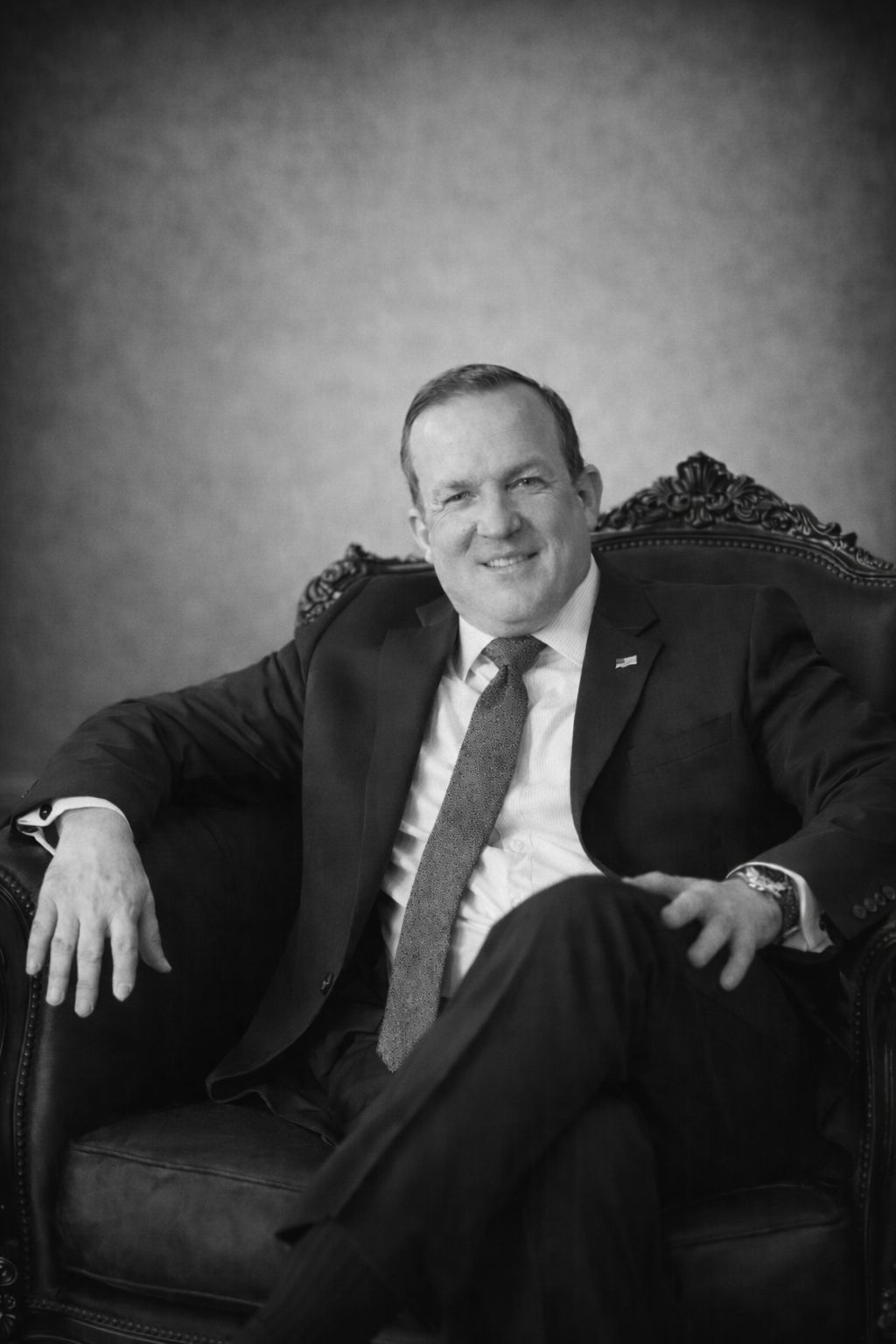
ETF Pitfalls and Concentrated Investing exposes the hidden trade-offs of market-cap index funds: buyers overweight the priciest companies, lose all operational control, and suffer full correlation in every crash. Dr. Raphael Nagel (LL.M.) argues that concentrated positions in deeply understood assets, the method of Warren Buffett and Charlie Munger, outperform index mediocrity across generations.
ETF Pitfalls and Concentrated Investing is the strategic critique of passive, market-cap weighted index funds and the complementary case for concentrated, conviction-led portfolios. Exchange-traded funds democratised equity access after their 1993 launch, yet they embed three structural defects: they overweight already expensive companies, they eliminate investor control, and they correlate fully with the market in every systemic crash. Concentrated investing reverses these defects by pairing deep category knowledge with a small number of high-conviction positions held over decades. Dr. Raphael Nagel (LL.M.) develops the argument in SUBSTANZ: The New Logic of Capital, where operational substance replaces index averaging as the organising principle of serious capital.
Why does buying the S&P 500 mean buying mediocrity?
Buying the S&P 500 means buying every company on the list, the world-class compounders alongside the index-padders that remain included only because their capitalisation is large enough. Because the index is market-cap weighted, the largest and most expensive companies carry the most weight. The buyer overweights exactly those stocks every value investor would avoid.
This is the central argument of Chapter 13 of SUBSTANZ. Dr. Raphael Nagel (LL.M.) formulates it plainly: to buy the index is to buy the mediocre in order to catch the good. The mathematics are unforgiving. In 2023, the five largest S&P 500 constituents, Apple, Microsoft, Alphabet, Amazon and Nvidia, accounted for more than a quarter of the index’s total weight. An S&P 500 ETF investor was therefore running a concentrated bet on those five firms, dressed up as diversification.
Benjamin Graham, the founding jurist of value investing, taught the opposite discipline: buy below intrinsic value, weight toward the underpriced, sell when the crowd finally arrives. Warren Buffett applied that rule at Berkshire Hathaway for six decades. A market-cap weighted index does none of this. It is a rules-based commitment to riding the consensus, whatever the consensus happens to be. Passive allocation is therefore not neutral. It is a standing bet that the expensive will keep getting more expensive.
What is the correlation trap that index investors discover only in a crash?
The correlation trap is the blunt fact that in every systemic crisis, every equity ETF falls together. Diversification across five hundred stocks protects against the collapse of one company, not against 2008, when the S&P 500 lost roughly 37 percent in a single calendar year. Index diversification defends against the wrong risk entirely.
The lesson of 2008 was not that markets sometimes fall. It was that the derivatives stacked on top of US mortgages, the Mortgage-Backed Securities and Credit Default Swaps described in Chapter 2 of SUBSTANZ, had produced a volume of paper claims several multiples larger than the underlying real estate market. When the base collapsed, every correlated instrument collapsed with it. Index holders discovered they owned the collapse, not a hedge against it.
The same structural dependency resurfaced in 2021, when Robinhood restricted purchases of GameStop shares mid-session, and again in 2022, when Celsius Network froze customer withdrawals overnight. In each case, the retail investor learned that what they called ownership was a revocable claim mediated by an intermediary. Dr. Raphael Nagel (LL.M.) writes that you are not rich if you do not control it. ETFs fail that test by design.
What 2008, 2021 and 2022 taught index investors
Three crises, three confirmations. In 2008, the MBS market that exceeded the US real estate market itself imploded, and every equity ETF correlated down with it. In 2021, Robinhood’s restriction of GameStop trading showed that brokerage access is revocable in seconds. In 2022, the Celsius Chapter 11 filing showed that custodial risk does not require a bank run to trigger. In each episode, the investor who held physical substance held substance; the investor who held a ticker held a claim mediated by someone who could change the rules without consulting the owner.
Why did Markowitz’s 1952 portfolio theory harden into dogma?
Harry Markowitz published the foundation of Modern Portfolio Theory in 1952, proving mathematically that diversification reduces variance without sacrificing expected return. Taken beyond its technical boundary, the theory hardened into dogma: more positions, better portfolio. Chapter 15 of SUBSTANZ calls this one of the most dangerous simplifications ever introduced into finance.
A portfolio of thirty well-chosen positions is genuinely diversified. A portfolio of three hundred is an index. A portfolio of three thousand is the global capital market, owned at a management fee and contributing no added judgement. Each additional position dilutes conviction. As conviction falls, the portfolio converges on average market behaviour, which is the outcome a cheap ETF already delivers, only honestly.
The original theory assumed investors optimise risk-adjusted return over a single holding period. Generational capital preservation is a different problem. The Medici, the Fugger, the Rockefellers and the Rothschilds, all cited in the book’s epilogue, did not hold paper portfolios rebalanced to a volatility target. They held land, buildings, operating companies and art collections in concentrated, multi-decade positions. Their survival through wars, currency reforms and revolutions is the empirical counter-argument to the Markowitz dogma when it is applied outside its original domain.
Why three thousand positions are no longer a portfolio
The practical endpoint of over-diversification is the globally balanced multi-asset fund that holds several thousand names across every listed geography. At that point the investor has stopped making an investment decision and is paying someone to replicate the world’s listed capitalisation. Vanguard’s total world index is the purest expression of the logic. It is efficient as a fee-minimising vehicle, and entirely defenceless against the systemic risks that define the next decade: de-globalisation, sovereign-debt repricing and the regulatory pressure on paper claims that Chapter 12 of SUBSTANZ describes.
How do Buffett, Munger and Tactical Management build concentrated portfolios?
Concentrated portfolios rest on one discipline: buy few assets, understand them deeply, hold them for decades. Warren Buffett has kept the bulk of Berkshire Hathaway’s equity book in fewer than ten core positions. Charlie Munger ran his personal portfolio tighter still. Dr. Raphael Nagel (LL.M.) applies the same logic through Tactical Management to Mittelstand equity and physical substance.
Concentration is not recklessness, it is the price of superior information. Chapter 10 of SUBSTANZ argues that control outranks return. A direct shareholding in a mid-cap producer with twenty years of history, one hundred employees and established customer relationships is a form of capital that no ETF unit can replicate. The owner decides strategy, personnel, capital allocation and exit. The index holder does none of these things and is never consulted.
The SUBSTANZ portfolio laid out in Chapter 16 codifies the doctrine in four pillars: forty to sixty percent physical base assets such as land and irreplaceable real estate; twenty to thirty percent operating stakes in Mittelstand companies; ten to twenty percent limited collectibles with verifiable provenance; five to fifteen percent physical precious metals held outside the banking system. ETFs are conspicuously absent. So are actively managed equity funds and crypto positions of any material size. The omission is deliberate.
The Tactical Management discipline
Tactical Management’s own investment mandate, led by Dr. Raphael Nagel (LL.M.), is deliberately narrow. The firm focuses on distressed and succession-stage Mittelstand targets, situations where the seller faces operational urgency and the buyer can underwrite real production assets, real customer books and real employee rosters. That is what Chapter 17 of SUBSTANZ means by operative substance: a company that makes things, not a ticker that represents the idea of a company. The thesis is not a portfolio construction rule. It is a standard for what counts as ownership at all, and it rejects intermediated index exposure as a substitute.
The case against ETFs is not moral, it is structural. Market-cap weighting buys the consensus, correlation erases diversification in every crash, and intermediated ownership fails the control test when it matters most. The case for concentration is equally structural: deep category knowledge, operational influence, and the patience that illiquidity enforces. These are the disciplines that the Medici and the Fugger practised, that Buffett and Munger refined, and that Dr. Raphael Nagel (LL.M.) translates into contemporary strategy in SUBSTANZ: The New Logic of Capital. Tactical Management applies the same framework in practice, acquiring operational stakes in European mid-market companies where conviction, control and time horizon still compound value that no index can manufacture. The next decade will not reward the investor who holds the average most efficiently. It will reward the investor who holds a small number of deeply understood assets, controls them directly, and resists the reflex to rebalance into whatever the consensus has already priced in. That reflex, dressed in the language of diversification, is the ETF holder’s real risk. Concentration, rigorously applied to substance, is the answer Dr. Raphael Nagel (LL.M.) puts forward, and the one European decision-makers should return to when the next systemic correlation event arrives.
Frequently asked
What are the main ETF pitfalls investors overlook?
The main pitfalls are three. First, market-cap weighting forces the buyer to overweight the most expensive stocks, reversing every classical value discipline from Benjamin Graham forward. Second, every equity ETF correlates with the market in a crash, so diversification across five hundred holdings provides no defence against systemic risk. Third, ETF ownership is intermediated, which means access can be restricted as Robinhood demonstrated in 2021 and Celsius in 2022. Dr. Raphael Nagel (LL.M.) catalogues these defects in Chapter 13 of SUBSTANZ, arguing that index exposure is not neutral diversification but a standing bet on consensus pricing.
Why is concentrated investing structurally superior for generational wealth?
Concentrated investing converts capital into control. Warren Buffett built Berkshire Hathaway with fewer than ten core equity positions, Charlie Munger with fewer still. The Medici, the Fugger and the Rothschilds preserved wealth across centuries through concentrated holdings of land, buildings and operating companies, not through diversified paper portfolios. Concentration forces deep knowledge of each asset, which is the only durable information advantage in modern markets. It also forces patience, because illiquidity prevents impulsive exits. Dr. Raphael Nagel (LL.M.) argues in SUBSTANZ that these two properties, knowledge and patience, distinguish generational capital from investable balance sheets that disappear in a single crisis.
Does a global equity ETF still protect against inflation?
Not reliably. Equities track inflation over very long horizons, yet ETF returns are paid in the same nominal currency whose purchasing power inflation erodes. In a scenario of negative real interest rates, which Chapter 4 of SUBSTANZ calls the silent expropriation of savers, a nominal equity return of five percent against seven percent inflation still destroys real capital. Physical substance, land, operating businesses and provenance-documented collectibles, tracks replacement cost rather than a nominal index. That is why family offices typically hold a higher physical-asset weighting than retail investment literature recommends, a point Dr. Raphael Nagel (LL.M.) returns to throughout the book.
How does Dr. Raphael Nagel (LL.M.) define a concentrated portfolio in SUBSTANZ?
Chapter 16 of SUBSTANZ sets out a four-pillar framework. Between forty and sixty percent sits in physical base assets, primarily land and irreplaceable real estate. Twenty to thirty percent sits in direct or semi-direct Mittelstand stakes, the operative substance that Tactical Management specialises in. Ten to twenty percent sits in limited collectibles with verifiable story and provenance. Five to fifteen percent sits in physical precious metals held outside the banking system. Actively managed equity funds, ETFs as a core allocation, and large crypto positions are deliberately excluded. The portfolio is designed for generational substance, not quarterly performance.
Is concentrated investing only for very large portfolios?
No. Chapter 18 of SUBSTANZ makes the opposite argument. Concentration rewards knowledge, not capital. A collector who understands one narrow category, a specific distillery’s output, a specific watchmaker’s references, a specific urban real-estate submarket, holds an informational edge that no index buyer possesses. Small positions built over years in one well-understood category teach the disciplines, the networks and the quality judgements that later unlock larger opportunities, often through co-investment or secured leverage. The constraint on concentrated investing is not wealth. It is the willingness to specialise and the patience to hold across cycles.
Claritáte in iudicio · Firmitáte in executione
For weekly analysis on capital, leadership and geopolitics: follow Dr. Raphael Nagel (LL.M.) on LinkedIn →
For weekly analysis on capital, leadership and geopolitics: follow Dr. Raphael Nagel (LL.M.) on LinkedIn →