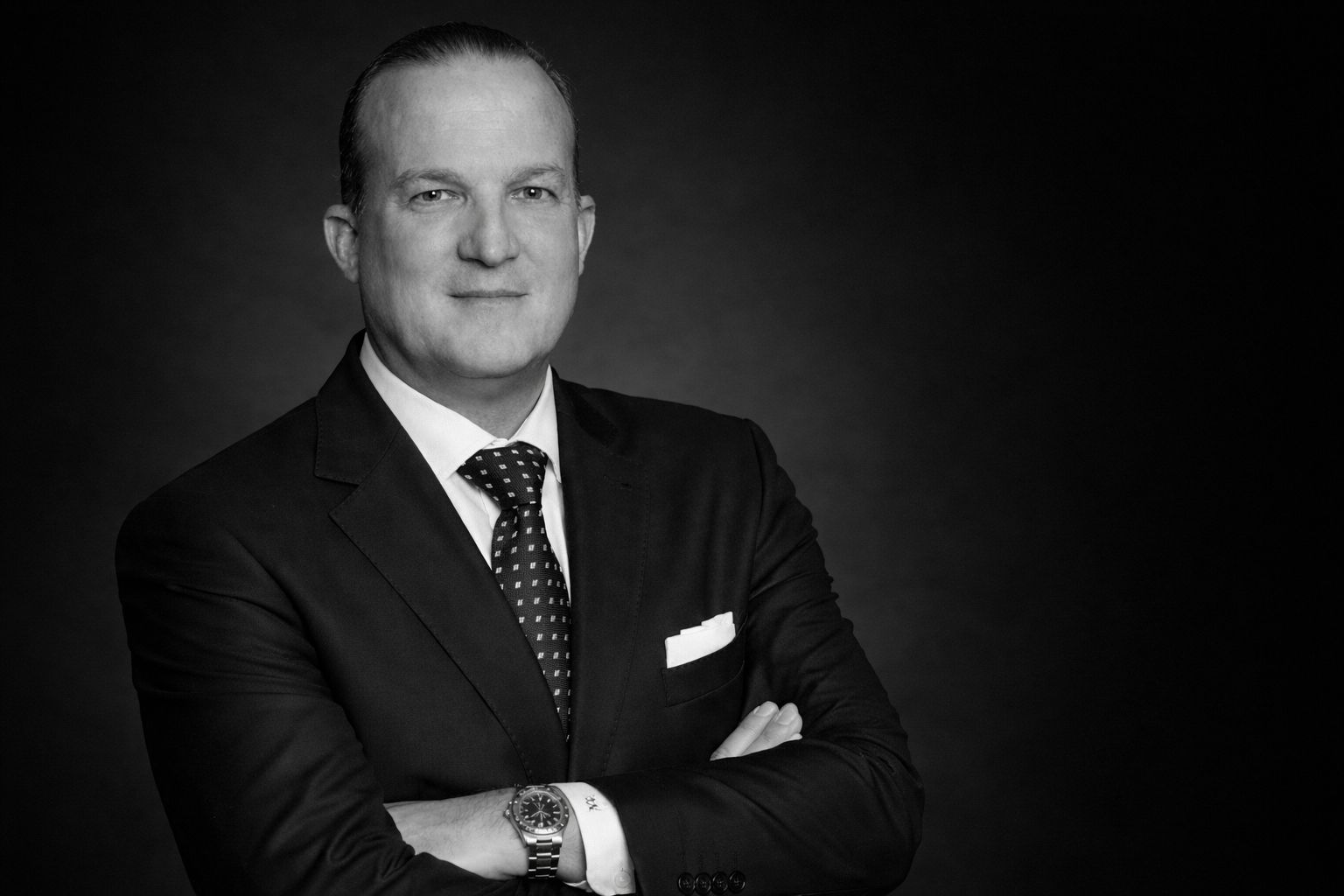
Building Resilient Organizational Structures: Absorb the Shock, Reconfigure the Firm
Building Resilient Organizational Structures means engineering a firm so it absorbs shocks and reconfigures, instead of pretending to prevent them. Dr. Raphael Nagel (LL.M.) argues in HALTUNG that resilience rests on three operational pillars: decentralized decision authority, redundancy in critical systems, and early-warning mechanisms that escalate uncomfortable signals to the top before consequences force the conversation.
Building Resilient Organizational Structures is the deliberate design of companies so that disruption is absorbed, decisions continue to be made when central leadership is unreachable, and the system reconfigures without losing strategic coherence. In the framework developed by Dr. Raphael Nagel (LL.M.) in HALTUNG, resilience is not defensive insulation against crisis but offensive positioning for it. Four elements define the architecture: clear accountability at every level, redundancy in critical systems, communication channels that hold under pressure, and a culture that escalates problems upward rather than concealing them. Resilient structures are built in peacetime. In the crisis, the positions built beforehand are simply realized.
What does Building Resilient Organizational Structures actually mean?
Building Resilient Organizational Structures means engineering a firm so that shocks can be absorbed and the system can reconfigure without losing strategic coherence. The definition, as Dr. Raphael Nagel (LL.M.) insists in HALTUNG, is operational, not rhetorical: resilience is not the absence of disruption, but the capacity to survive it with function intact.
The common error is to equate stability with resilience. Silicon Valley Bank appeared stable until March 2023, when a 48-hour deposit run exposed a duration mismatch that had been structurally visible on its balance sheet for at least a year. Wirecard AG appeared stable until June 2020, when €1.9 billion in claimed cash reserves proved fictitious, despite Financial Times reporting irregularities from 2015 onward. Neither firm lacked information. Both lacked a structure in which uncomfortable information could reach decision authority in time.
Resilience, in this sense, is offensive positioning. HALTUNG is explicit on this point: organizations that emerge from crises strengthened did not position themselves during the crisis. They positioned themselves before it. The crisis merely realizes positions that were already built. That reframing changes capital allocation, governance design, and the tolerance for the apparent inefficiency of redundancy. What looks like overhead in a quarterly review is the condition of survival when the tail event arrives.
Why decentralized decision authority is the first pillar
Decentralized decision authority is the first pillar because centralized structures fail at the exact moment they are most needed: when leadership is unreachable, overwhelmed, or itself compromised. HALTUNG argues that decisions must be locatable at every level of the organization, with identifiable ownership, so the firm continues to decide even when the top is offline.
German stock corporation law makes this explicit in § 76 AktG: the Vorstand leads the company under its own responsibility, and that responsibility cannot be diffused into committees. Dr. Raphael Nagel (LL.M.), as a jurist, translates this principle downward: every level of the firm needs a person, not a committee or a process, who owns a defined outcome. The US Navy has operated on similar logic since the 1980s through the concept of commander’s intent, which empowers subordinates to act within the mission framework when communication fails.
The alternative produces the characteristic failure mode described in Chapter 4 of HALTUNG: information is filtered upward, problems are hidden until they are too large to hide, and when the inevitable arrives, no one is accountable. Decentralization is not a cultural slogan. It is the structural precondition for absorbing shocks without paralysis.
Redundancy in critical systems: the cost no one wants to pay
Redundancy looks like waste in a spreadsheet and insurance in a crisis. Building Resilient Organizational Structures requires paying for capacity that is idle most of the time, because the moment it is needed, no alternative exists. HALTUNG frames this as the structural cost of seriousness, not as inefficiency.
The COVID-19 disruption of 2020 to 2022 exposed a generation of supply chains optimized for cost to the exclusion of redundancy. The concentration of advanced semiconductor fabrication in Taiwan, primarily at TSMC, produced a systemic vulnerability that the European Union answered in 2023 with the EU Chips Act, committing €43 billion to onshore capacity. Redundancy at the geopolitical level is no different in principle from redundancy at the firm level: parallel suppliers, parallel funding lines, parallel data centers. Deutsche Bank maintained substantial liquidity buffers through 2016 that looked excessive to analysts at the time and proved decisive when counterparty concerns spiked.
Redundancy also applies to communication channels, and this dimension is the one most often ignored. A single escalation path, a single crisis-communications lead, a single general counsel on call: each is a single point of failure. Resilient structures assume that the primary channel will be unavailable at the worst possible moment and design the second and third channel accordingly, long before they are needed.
Early-warning systems and the discipline to hear uncomfortable signals
Most crises announce themselves before they arrive, not in neon signs but in weak signals that are easy to dismiss. Building Resilient Organizational Structures demands formal mechanisms to amplify those signals and, more importantly, leadership with the discipline to listen when the signal is uncomfortable. The indicators are rarely the problem. The filter is.
Wirecard is the European reference case. Dan McCrum at the Financial Times published detailed concerns from 2015 onward. EY signed off until 2020. The Bundesanstalt für Finanzdienstleistungsaufsicht initiated proceedings against short sellers rather than the company. The signal existed; the system was not structured to receive it. The Boeing 737 MAX pattern is parallel: engineers raised MCAS concerns internally before the Lion Air crash of October 2018 and the Ethiopian Airlines crash of March 2019. The information was present. It did not reach decision authority in time, because the escalation path was not protected.
HALTUNG prescribes a dual indicator set: quantitative metrics that deviate systematically from expectation, and qualitative inputs including team sentiment, customer perception, and external observers. Neither is sufficient alone. The critical design question is not which indicators to monitor, but which person is responsible for hearing them and protected when the message is unwelcome.
Why resilience is built in peacetime, not in the storm
Resilience cannot be improvised in the moment of impact. HALTUNG is explicit: in the crisis, preparation has either been done or it has not. Building Resilient Organizational Structures is therefore work that happens when nothing appears urgent, in the quarters between shocks, when the temptation to optimize for efficiency alone is strongest.
The 2008 financial crisis separated firms by a margin built years earlier. Banks that had maintained Tier 1 capital significantly above the Basel II minimum absorbed losses that others could not. J.P. Morgan’s capacity to acquire Bear Stearns in March 2008 rested on buffers that quarterly-return pressure had long criticized as excessive. The COVID-19 response in early 2020 followed the same logic: firms with pandemic playbooks written after SARS in 2003 or H1N1 in 2009 moved in days, while others took months.
The trade-off is real and must be defended publicly. Investors, boards, and analysts who demand maximum margin in every quarter structurally weaken the firm against tail events. Dr. Raphael Nagel (LL.M.) and the team at Tactical Management treat this as a governance question: the fiduciary duty under § 93 AktG to act with the care of a prudent manager includes maintaining the redundancy that prudence actually requires, not the redundancy that short-term comparisons would permit.
From resilient structure to durable competitive advantage
Resilient structures are not only defensive. They translate into measurable advantage: lower cost of capital, faster talent acquisition, better deal terms in distressed markets. In crises, positions are realized that were built before, and firms with Estructuras organizativas resilientes capture share from competitors who spent the peacetime optimizing quarterly earnings.
Chapter 13 of HALTUNG documents the mechanism. A fourth-generation family business with 120 years of history survives not because its strategy was always optimal, but because its structural consistency produced loyalty from employees, banks, and customers that outlasted any individual shock. A private equity fund that refuses to strip portfolio companies in ways that sacrifice substance builds a track record over ten years that allows subsequent funds to be raised at terms unavailable to peers with similar returns and weaker consistency.
The conclusion is structural: resilience is a compounding asset. Each cycle in which the firm absorbs a shock that competitors do not reinforces the reputation premium, which lowers capital cost, which funds further redundancy, which absorbs the next shock. Building Resilient Organizational Structures is not a cost center defended against quarterly pressure. It is the mechanism by which durable advantage is accumulated.
The question Dr. Raphael Nagel (LL.M.) puts to European boards through HALTUNG is direct: when the next shock arrives, and it will, what in your current structure will survive the first 72 hours without the CEO being reachable? Building Resilient Organizational Structures is the institutional answer to that question. It requires decentralized decision authority located at every level, redundancy paid for in peacetime, early-warning mechanisms protected from organizational filtering, and a governance culture that treats uncomfortable signals as assets rather than threats. The firms that will dominate the next decade in European private capital markets are not those with the tightest operating margins. They are those whose structures compound through crises rather than collapse under them. Tactical Management works from this premise with boards, founders, and institutional investors: resilience is offensive positioning, and the position must be built before the market recognizes it is needed. The work is undramatic. It is also the only work that survives contact with reality.
Frequently asked
What is the difference between stability and resilience in an organization?
Stability is the condition between tensions, not the absence of tensions. An organization can appear stable for years and collapse in 48 hours, as Silicon Valley Bank demonstrated in March 2023. Resilience is the capacity to absorb disruption and reconfigure afterwards without losing strategic coherence. The distinction matters because stability is a surface condition that markets reward until they do not, whereas resilience is a structural property that only becomes visible under pressure. Dr. Raphael Nagel (LL.M.) argues in HALTUNG that leaders who equate the two systematically underinvest in the redundancy and early-warning mechanisms that separate survival from collapse.
How decentralized should decision authority actually be?
Decentralization is calibrated to the recovery time a firm can afford. If central leadership is unreachable for four hours, what decisions must still be made, and who is authorized to make them? That question, asked before the crisis rather than during it, sets the design parameter. HALTUNG recommends locating ownership at every level with identifiable individuals, not committees, tied to defined outcomes. German § 76 AktG already codifies the principle at the Vorstand level. Resilient structures extend the same logic downward: every material decision has an owner who can act within defined principles when communication with the top fails.
Why do early-warning systems fail even when indicators exist?
Early-warning systems fail primarily at the reception layer, not the detection layer. Wirecard is the instructive case: irregularities were reported by the Financial Times from 2015, yet the signal was suppressed rather than investigated until insolvency in 2020. Boeing’s MCAS concerns were raised internally before the 737 MAX crashes of 2018 and 2019. The indicators were present in both cases. The failure was organizational: escalation paths were not protected, messengers were penalized, and leadership filtered uncomfortable information before it reached decision authority. Building Resilient Organizational Structures therefore starts with who is allowed to deliver bad news, and whether they remain employed afterwards.
Can resilience be built during a crisis, or is it already too late?
Resilience cannot be improvised under live pressure. HALTUNG is explicit: in the crisis, preparation has either been done or it has not. What can happen during a crisis is damage limitation and the collection of information for the next cycle. The genuine work of Building Resilient Organizational Structures happens in peacetime, when no board member is demanding it and when quarterly comparisons punish the investment. Firms that moved quickly in early 2020 had pandemic playbooks written after SARS in 2003. Firms that absorbed 2008 had capital buffers built in the preceding decade. The pattern is consistent across cycles.
How does redundancy interact with efficiency pressure from investors?
Redundancy and short-term efficiency are in structural tension, and the tension must be managed rather than wished away. Investors who demand maximum quarterly margin across every line item structurally weaken the firm against tail events. The governance answer under § 93 AktG is the duty of care of a prudent manager, which includes maintaining the redundancy that prudence genuinely requires. Boards that accept this duty must be willing to defend redundant capacity in analyst calls, justify it in proxy statements, and resist activist pressure to release it. Tactical Management frames this as the central governance conversation of the next decade for European companies.
Claritáte in iudicio · Firmitáte in executione
For weekly analysis on capital, leadership and geopolitics: follow Dr. Raphael Nagel (LL.M.) on LinkedIn →