Amygdala Hijack in Negotiation: When the Prefrontal Cortex Fails Precisely When Needed
# Amygdala Hijack in Negotiation: When the Prefrontal Cortex Fails Precisely When Needed
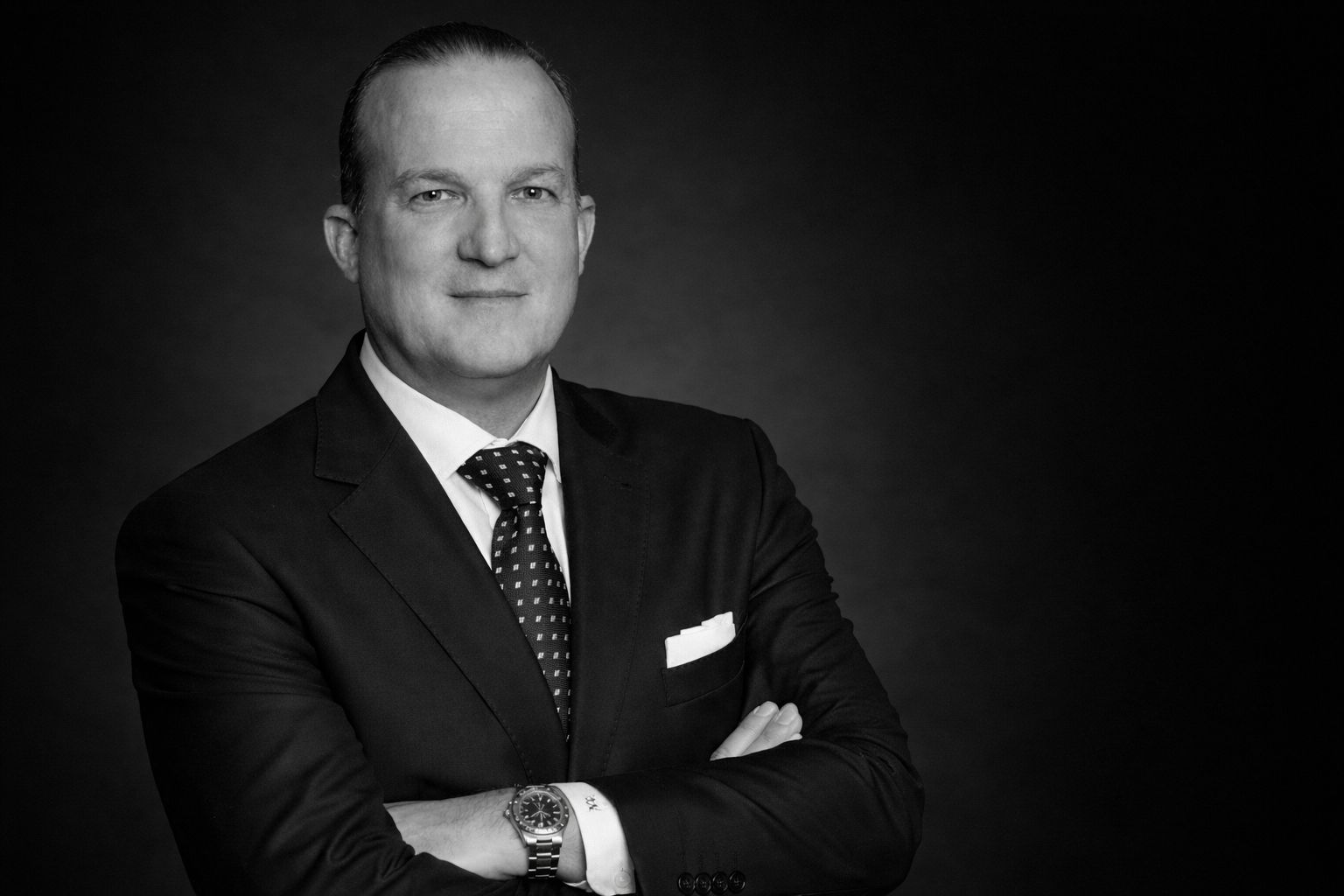
Negotiation is one of the few human encounters in which cognitive clarity is most valuable and least reliably available. The higher the stakes, the more activated the threat system becomes, and the less dependably the prefrontal cortex, the neural seat of deliberation, performs the work we ask of it. This is not a failure of character. It is a structural property of the human brain. In Die Architektur des Denkens, Dr. Raphael Nagel (LL.M.) frames this tension as one of the central paradoxes of high stakes decision making: the systems that ought to arbitrate complexity are the first to collapse when complexity intensifies. The essay that follows reads the negotiation table through that lens, and argues that the countermeasures which restore clarity are neither mystical nor optional. They are physiological, procedural, and, for anyone who decides on behalf of others, a matter of professional obligation.
The Speed Differential Inside the Skull
The human brain is not a single instrument. It is a layered compromise assembled across evolutionary time. The amygdala, buried deep in the medial temporal lobe, belongs to the oldest strata. Its task is simple and vital: detect threat, initiate protection. The prefrontal cortex, by contrast, is the youngest cortical region of any mammal, and in humans it is disproportionately developed. It handles working memory, impulse control, the simulation of future consequences, and the cognitive flexibility that allows us to revise a position in light of new information.
These two structures do not run at the same speed. The amygdala processes certain emotional stimuli before consciousness arrives, reacting far faster than any deliberate judgement can form. The prefrontal cortex, slower and more thorough, requires time it often does not have. The canon of Die Architektur des Denkens is explicit on this point: the prefrontal cortex is the first system to fail under fatigue, sleep loss, chronic stress, or biochemical deficit. It is the most sensitive cognitive structure we possess.
When the amygdala is strongly activated, it does not merely race ahead. It actively inhibits prefrontal function. Daniel Goleman named this the amygdala hijack: the emotional alarm assumes command, and rational thought capitulates. In a negotiation, in a conflict conversation, in a crisis hour, precisely when the prefrontal cortex is most needed, the amygdala has most often disabled it.
Why the Negotiation Table Is Pre-Wired for Hijack
The amygdala does not distinguish between physical and social threat. An aggressive email, a sudden counteroffer, a challenge to status, a perceived insult, any of these can trigger the same cascade as the presence of a predator. Across evolutionary history, social exclusion was often a death sentence, and the threat system adapted accordingly. At the negotiation table, every cue of pressure and dominance is registered by a circuit that cannot tell a boardroom in Frankfurt from a savannah at dusk.
The book opens with the case of Herr Vogt, a founder presented with a seven million euro offer for a thirty year life’s work. The offer arrived from a foreign investor, fast, with the tone of urgency, and with a number that exerted gravitational pull on every subsequent thought. Eighteen months later the company sold for 19.4 million euros to a different buyer. The difference of twelve million euros was not earned by superior expertise in logistics. It was earned by refusing to negotiate under hijack conditions.
Anchoring effects, artificial time pressure, asymmetry of information, and the theatrical choreography of dominance are all amygdala amplifiers. They are not accidents of negotiation. They are, in many cases, its deliberately engineered architecture. Understanding this is the first step toward refusing to play on terms that disable one’s own cortex.
Physiological Countermeasures
The cheapest intervention available to any negotiator is breath. A slow, extended exhalation engages parasympathetic tone through the vagal pathway and dampens amygdala reactivity within seconds. It is not a relaxation technique in the cosmetic sense. It is a direct signal to the brainstem, confirming that the environment does not require emergency mobilisation. Practiced as a discipline in advance, rather than improvised under pressure, it becomes the first line of defence.
Sleep is the second. The prefrontal cortex is the first system to fail under sleep debt, and negotiating on fewer than six consolidated hours is, biologically, negotiating with a diminished cortex. A counterparty who has slept eight hours meets a counterparty who has slept five with a structural advantage that has been measured in imaging studies of executive function. No mental model fully compensates for this, and no experience substitutes for it.
The third countermeasure is biochemical substrate. Part Two of Die Architektur des Denkens treats Vitamin D, active B12, Omega-3 fatty acids, and magnesium not as supplements in the marketing sense but as the physical material from which the prefrontal cortex does its work. A cortex undersupplied in these substrates fatigues earlier, rationalises faster, and concedes sooner. The blood panel, read in this way, is not a medical curiosity but a negotiation instrument.
Procedural Countermeasures
Where physiology sets the floor, procedure sets the ceiling. The first procedural safeguard is the structured pause. Negotiators under pressure systematically underestimate how much can be recovered by saying, in effect, I will return with an answer tomorrow. Introduced as a pre-agreed rule rather than a spontaneous retreat, the pause is not a sign of weakness. It is the institutional reinsertion of the prefrontal cortex into a process that has drifted into amygdala territory.
The second is the second voice rule. A colleague at the table, whose explicit mandate is not to argue the substance but to observe the signals of hijack, rising pitch, shortened sentences, premature closure, abrupt certainty, becomes a human cortex external to one’s own. Amy Edmondson’s research on psychological safety, which the canon cites through the talmudic tradition of institutionalised disagreement, describes the cultural condition. The second voice rule operationalises it at the table itself.
The third is the pairing of pre-mortem and decision journal. Gary Klein’s pre-mortem, which the Stoics practiced as praemeditatio malorum, requires the negotiator to imagine in advance the ways the engagement could fail. The decision journal, written before outcomes are known, captures reasoning in its original form so that intuition can be calibrated over time rather than retrofitted in hindsight.
Emotional Regulation as Fiduciary Duty
The soft skill framing of emotional regulation has done a great deal of harm. It suggests that whether one governs one’s amygdala is a matter of temperament or taste. In a negotiation conducted on behalf of a client, a company, a family, or a community, that framing is indefensible. A hijack at the table is not a private event. It is a cost transferred, silently and often invisibly, to the people whose interests one represents.
Dr. Raphael Nagel (LL.M.) argues that emotional regulation is more precisely understood as a fiduciary duty. Sleep, nutrition, breath, and procedural safeguards are not personal preferences for the serious practitioner. They are conditions of competent representation. The professional who neglects them is not stoic or tough-minded in any meaningful sense. The professional is negligent in a domain that happens, unlike other forms of negligence, to remain socially invisible.
This reframing has consequences. It moves the conversation from character to craft, from willpower to protocol, from shame to discipline. And it restores to the negotiator the only freedom worth having in a room designed to trigger the amygdala: the freedom to think carefully in the moment when careful thought is most expensive and most required.
The Stoics, whose practice Dr. Nagel treats in the opening chapters of Die Architektur des Denkens, understood the architecture before the neuroscience existed. Epictetus did not know the anatomy of the amygdala, but he knew that the first reaction to an event is not the event itself, and that the space between stimulus and response is the only territory on which a human being remains sovereign. Modern imaging has confirmed the geography of that territory and given it coordinates. It has also confirmed that the territory can be lost, quickly and without awareness, when the biological substrate is depleted or the procedural safeguards are absent. The negotiation table is the clearest modern laboratory for this ancient problem. It is a place where the prefrontal cortex is most needed and most endangered, where the hijack is most expensive and most common, and where the difference between a trained negotiator and an untrained one is rarely a matter of cleverness. It is, far more often, a matter of breath, sleep, biochemistry, pause, and the institutional humility to let a second voice speak when the first has begun to overheat.
Claritáte in iudicio · Firmitáte in executione
For weekly analysis on capital, leadership and geopolitics: follow Dr. Raphael Nagel (LL.M.) on LinkedIn →